

So you’re eloping, and now you’re wondering how to choose a dress for your elopement. Far more goes into this decision than most people realize. A real person wears that dress, so personal style matters, but practicality matters just as much. As an elopement photographer who has eloped firsthand, I know both sides of the decision. Here are the key things to consider before you start your search.
Start With Your Personal Style
Put intentional thought into your personal style on your elopement day. You’ve already made a bold choice by eloping. So why not hit the ball out of the park and bring your personal style in tenfold?
Personal style goes beyond trends and fashion. It’s a visual expression of who you feel you are. When you curate a dress that reflects your inner landscape, you bring your authentic self into your wedding day. That’s a powerful way to show up.
Your personal style also guides your preferences before you even start looking. It shapes your color palette, fabrics, patterns, and the level of formality you want in your dress. In addition, it steers you toward a dress that honors your comfort and body shape. Pay attention to how each dress feels, and make sure it checks all the boxes.
Bridal designers generally break personal style into categories. If you enter your search with a clear idea of your style, the process gets much easier.
Categories of Bridal Gowns
- Classic and Traditional: Clean, timeless silhouettes like ball gowns and A-lines. Structured or rich fabrics like satin and silk give these dresses an elegant look.
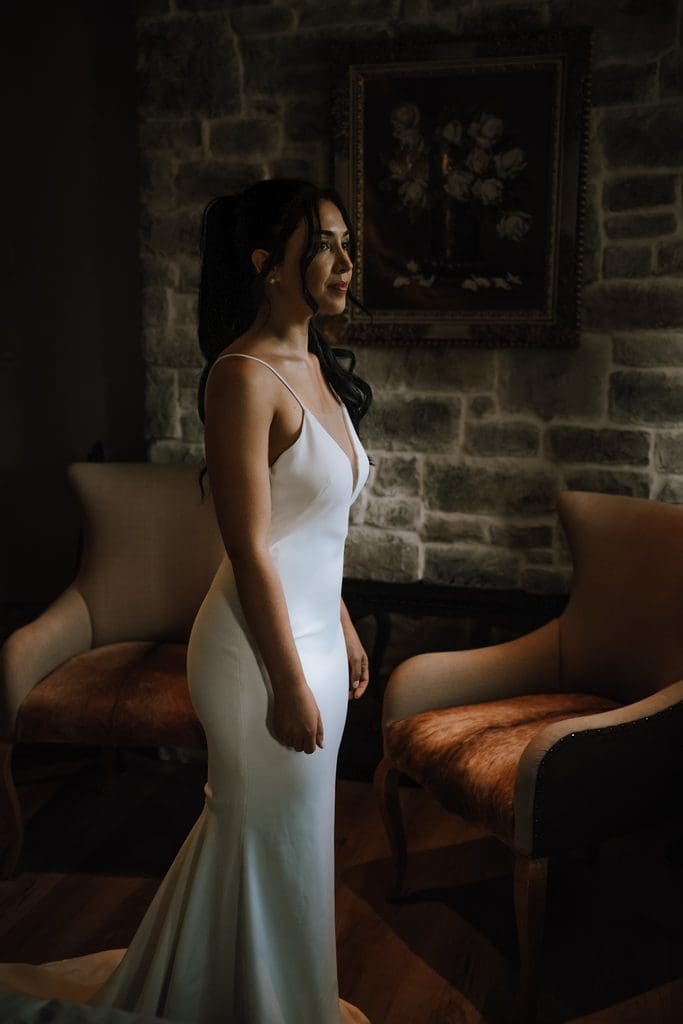
- Modern and Minimalist: Sleek, architectural shapes and slip dresses. Silky fabrics with little to no embellishment define this style.
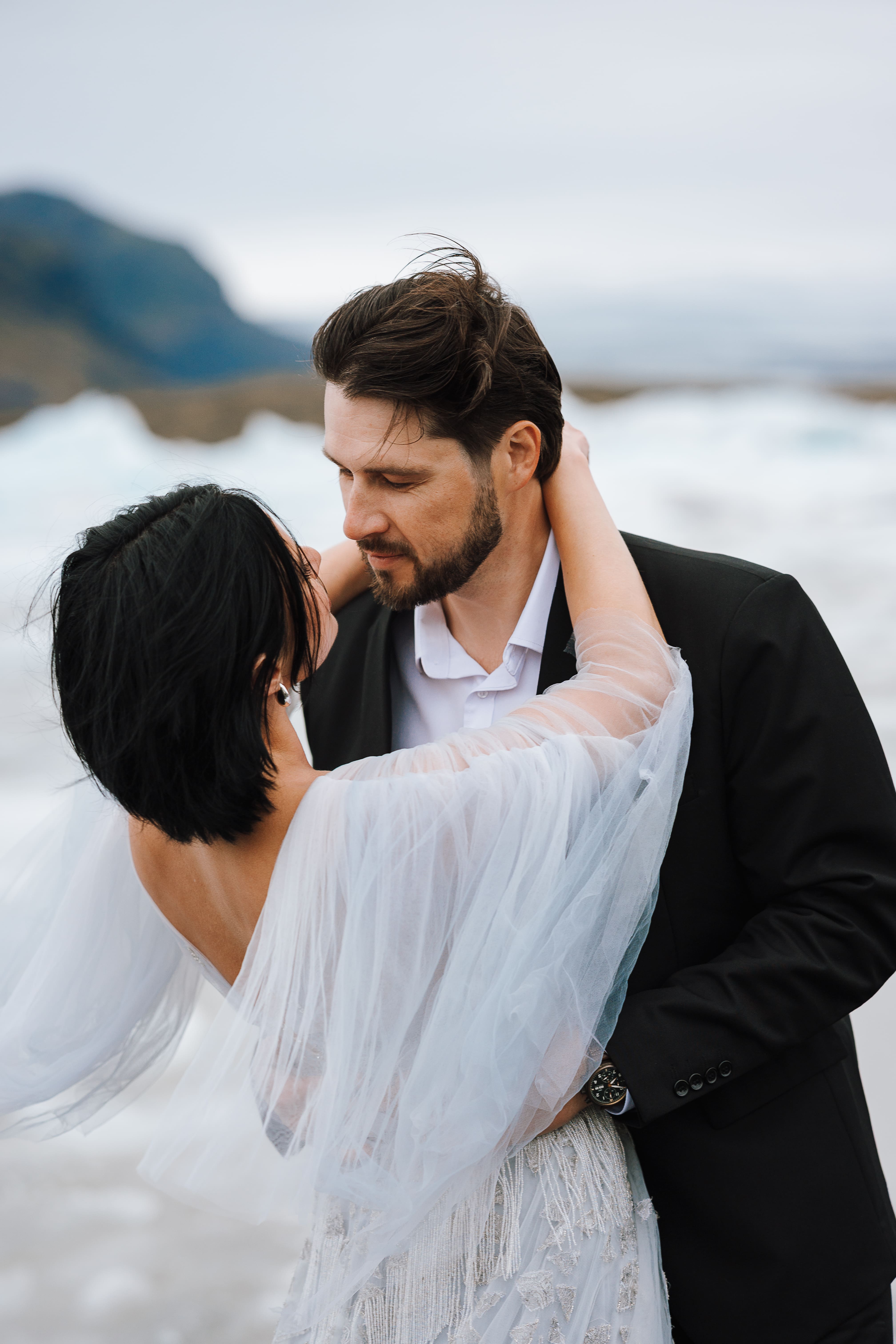
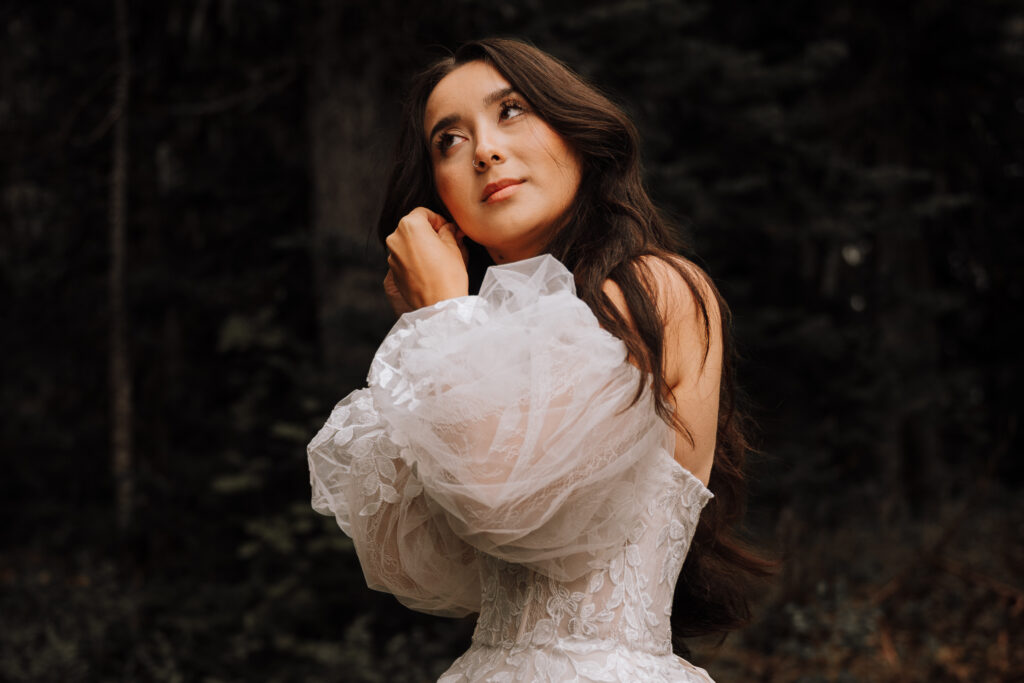
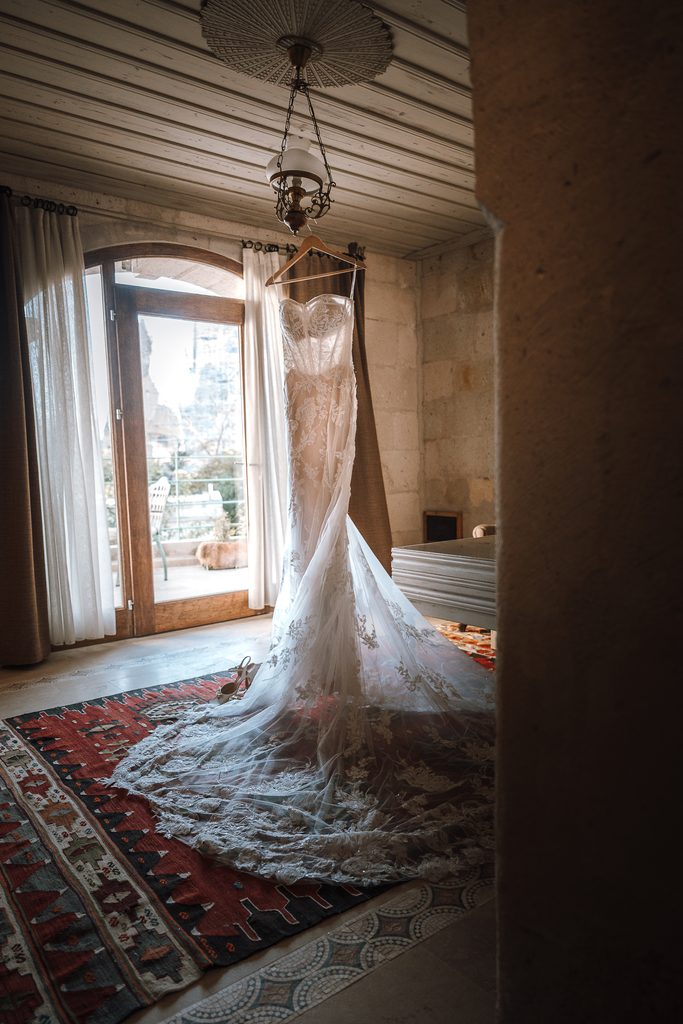
- Romantic and Whimsical: Soft lace appliqués, florals, and sweetheart necklines add charm. Airy, dreamy fabrics like tulle and chiffon often come in non-traditional bridal colors.
- Bohemian and Free-Spirited: Relaxed, effortless silhouettes feel comfortable and unrestrictive. Natural textures and unique patterns complete the look.
- Glamorous and Dramatic: High-impact details like sparkling beadwork, bold trains, and plunging necklines stand out. Sculpted mermaid or trumpet silhouettes add drama.
Choose a Dress That Lets You Move
Elopements revolve around experiences for couples: activities, activities, activities, and intimacy. Therefore, solidify your vision before you buy your dress, so you can move through your plans on your elopement day. Mobility ranks as probably the second most important factor to consider.
If you can’t move with comfort and ease, you risk feeling uncomfortable all day, and that’s a drag. A dress only functions if its silhouette allows for movement. The bodice, waistline, and skirt interact to create the overall shape and structure. However, that same structure can limit your movement.
My go-to dress recommendations for optimal elopement mobility are:
- A-line gown: The skirt flares gently from the waist, so you can walk and climb with ease.
- Ball gown: The full skirt leaves plenty of room for your legs.
- Trumpet: This silhouette resembles a mermaid dress, but it has some give. The sweeping flare starts mid-thigh, which allows a better range of motion and effortless walking, hiking, and sitting.
Mobility also comes from the movement and energy of the fabric. Think about how the dress moves, not just how it looks on a hanger. Ask yourself these questions:
- Does it match your personal style and show up for your elopement plans?
- Does it spin?
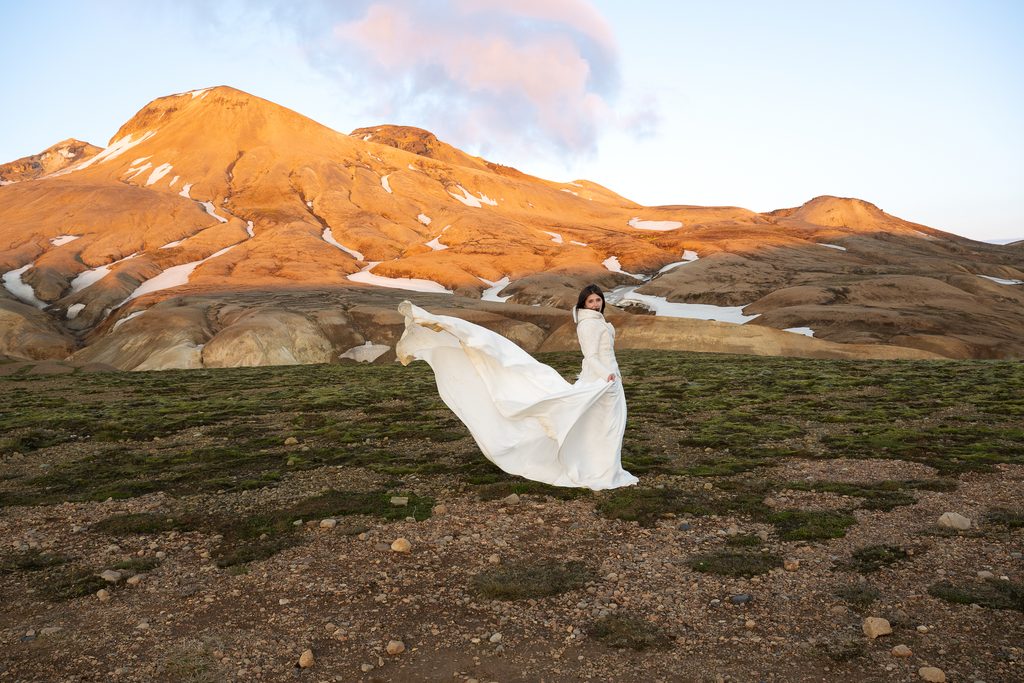
- Can the wind carry it, if you want that?
- Does it have a train, and is the train light and moveable?
- What energy does it have?
Match Your Dress to Your Elopement Activities
You can include many types of activities in your wedding day, but your attire needs to suit each one. If you haven’t planned any activities yet, browse my post for the best Vancouver elopement ideas for activity ideas.
Nothing feels worse than restriction or discomfort on your wedding day. Your dress needs to handle everything you plan. For example, a hiking elopement requires room to move and lift your legs easily. A beach elopement may call for a lighter skirt that won’t drag in the sand.
Ask yourself one simple question before you buy: can I move comfortably in this dress during every activity on my list?
I remember being at the dress shop shopping for my elopement dress knowing I needed movement. We planned to go hiking and horse back riding and I wanted to make sure that I choose a dress that I could do that in. Did I maybe look a little ridiculous testing out dresses limitations? Yes.
Do I regret making sure my dress have the mobility necessary? Absolutely not. Here are some pro tips tied to specific activities.
Hiking and Walking
Mobility is key here. Can you move around in your dress for the required distance with ease? Does it lift easily, and how heavy is it? Also ask yourself whether you can carry the weight of your dress to the destination without exhausting yourself.
Biking
Consider the length of your train for safety. Can you keep it from tangling in the gears or wheels? Does it fit into a cute basket on the back without any fear of falling out?
Kayaking
Do you fit in a kayak with your skirt size? Does your bodice let you sit comfortably, without boning stabbing into your ribs or underarms?
Rock Climbing
If you choose to climb in your dress, can you comfortably fit a climbing harness around your dress and thighs?
Think About Fragility and Test Your Dress
How fragile your dress is matters too. I know too many brides who chose thin-strap dresses, and the straps snapped easily and early in their day. As a result, they needed emergency repairs.
I personally had horseback riding and hiking during our elopement. I tested whether I could swing my legs up and over to make sure I could get into a saddle. The ladies at the store gave me some weird looks, but hey, you’ve got to check the specifications!
Consider Your Terrain
If you’re planning an adventure elopement, preparation matters. Definitely consider the terrain when you plan your attire. Mountainous locations make absolutely beautiful elopements, but you need to prepare for them. Ask yourself whether your dress will function the way you need it to in the terrain you’re venturing into.
Think about the terrain you’re headed into:
- Mountains: Is it steep? Rocky? Is there snow? Are you hiking? Can you travel up to your destination with ease?
- Plains: Most if not all dresses work on this terrain.
- Plateaus: Are there steep cliffs around? Stay mindful of the weight and length of your train, so you can move it around with ease and stay safe.
- Deserts: With higher temperatures, is your dress breathable? Does the fabric prevent uncomfortable friction? Do you mind if sand or vegetation gets tangled in the fabric of your dress?
- Valleys: Most if not all dresses work on this terrain.
Check the Closures
If you plan an intimate elopement, you may not have help getting into your attire. Do you want to save your reveal for a first look? If so, your partner won’t be the person you want helping you get dressed.
As an elopement photographer, I always make myself available to help with closures. However, that depends on the couple’s comfort and on whether they want a photographer present during the getting-ready portion of their day.
So here’s the money question: can you get into your elopement dress independently, or do you need help?
Zippers
Zippers are pretty easy. Most people can reach and do up a zipper independently if needed.
Buttons
Buttons add a layer of difficulty. Most dresses with buttons have a zipper underneath, and the buttons overlay the zipper with tiny elastic loops that fasten them. Buttons usually require some help to loop around each one.
Pro tip: Crochet hooks are amazing for this task. They make it easier to fasten the buttons, and they also help you undo them when you’re ready to take your dress off.
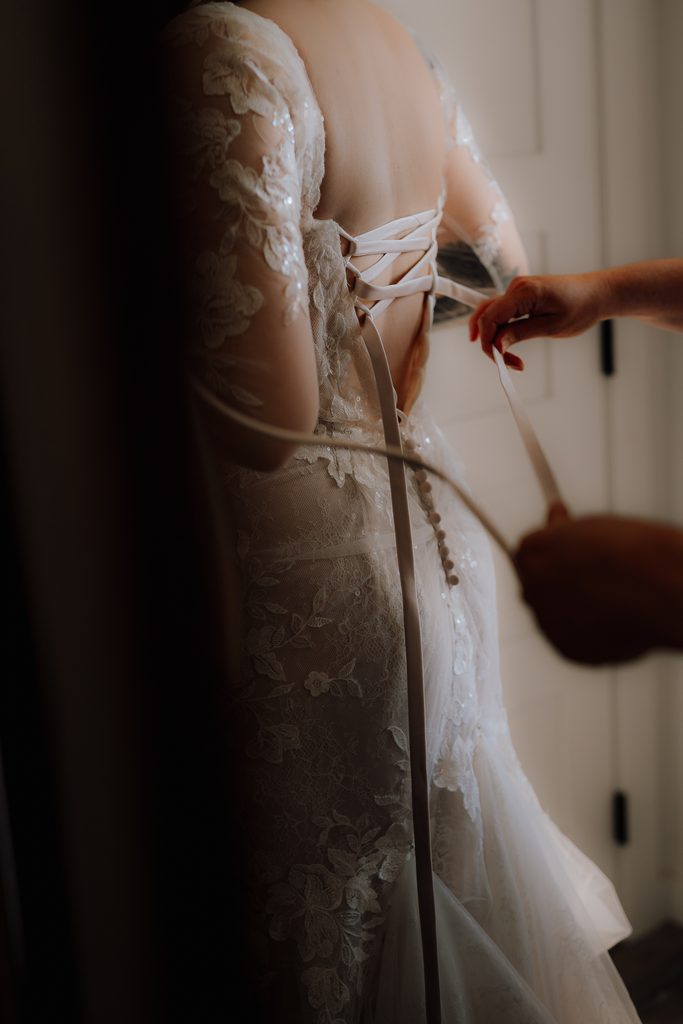
Corsets
Corsets can also require extra support. You need to tuck the corset panel in so it stays hidden. You also need the tension of the corset to stay even and hold in place.
Complement Your Environment
In my experience, most brides’ personal styles shine in the environments they choose for their elopements. The locations they decide on often feel authentic to the couple’s personal style. Therefore, think about the terrain you might navigate, but also consider the environmental factors that could play a part in your day.
Rain and Water
Will your dress feel okay in the rain or when water touches it? Or will it feel really heavy? Will the rain make it transparent? Thin slip fabrics can be the worst for this.
Dresses with lace or lace and floral appliqués show up wonderfully in rainy weather, because the rain blends into the texture of the dress. Thick satin gowns also look great in the rain. However, they hold a lot of moisture, which makes them heavier to navigate.
Wind
Does your dress have the energy it needs to work with the wind? Does it flow, and will it flow just enough to avoid taking off on you? Entirely loose or unanchored styles can billow uncontrollably in strong winds. Large slits can also blow open.
Color
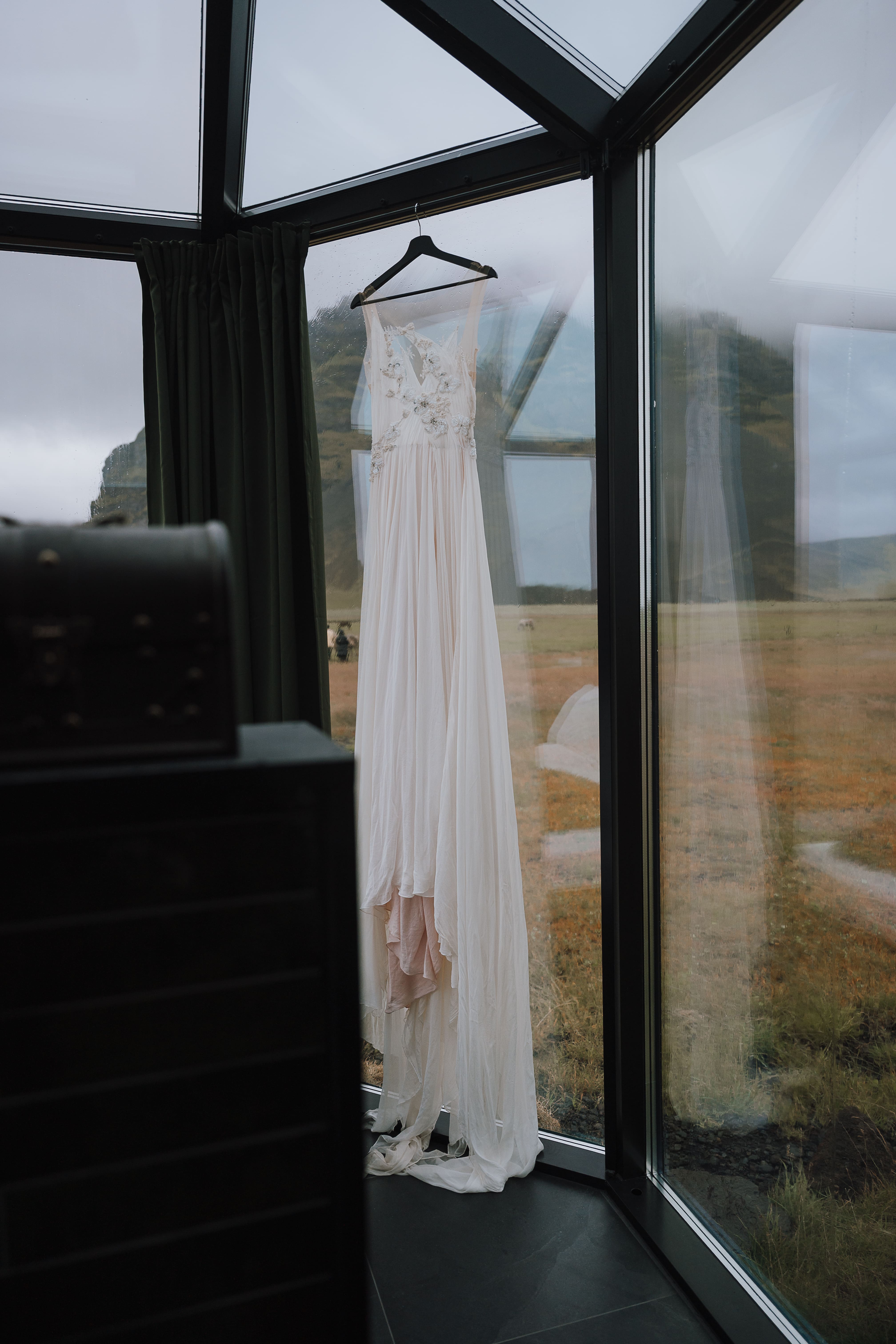
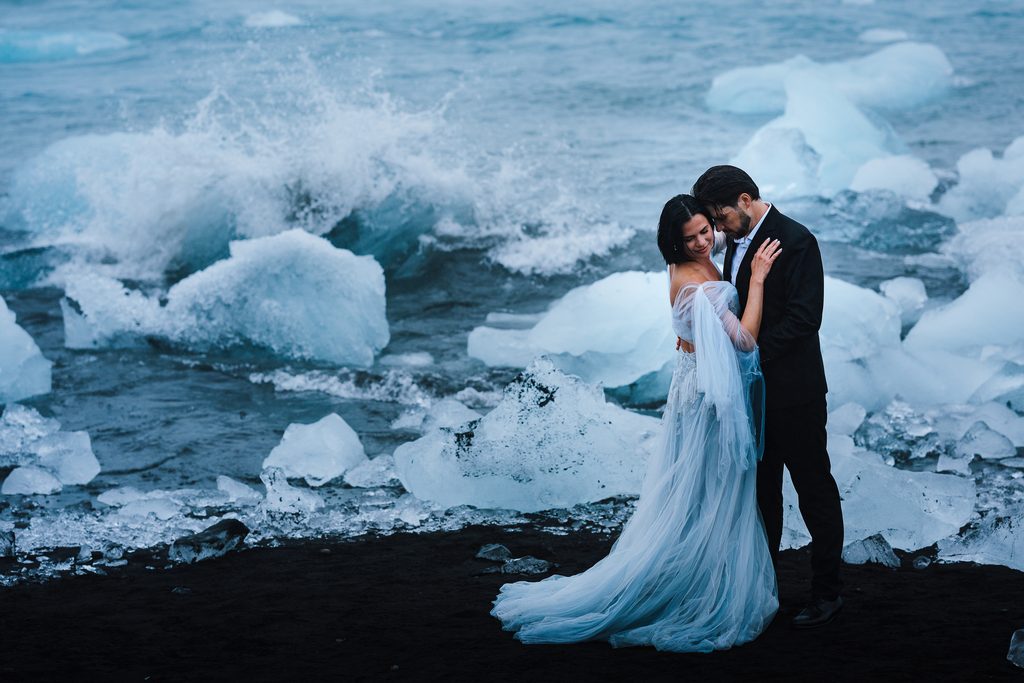
We love a little color on our elopement days, and I know our couples do too. Don’t be afraid to choose a dress that expresses who you are! Pick a color that speaks to you, pick a color to be different, or pick a color that enhances your elopement setting.
There’s nothing worse than getting your gallery back and finding that your dress didn’t pop, so you blend into the environment. If you’re going for dark and moody, make sure your color has real vibrance. Alternatively, avoid choosing a location that’s the exact same color as your dress. For example, a dark green or black dress in a cedar grove with limited light won’t give you the separation you need from the environment.
Complementary colors can add an artistic elevation to your day if you’re open to it. Here are some pairings to try:
- Green forest: dark red or burgundy
- Bold sunset during golden hour: light or dark blues
- Alpine glow morning hike with soft purple and pink skies: soft yellows
- Turquoise beaches: textured tan, pinks, or soft reds
If you’d rather match the environment, pick a dress with subtle matching colors or patterns.
Travel-Friendly Dress Tips
If you’re flying for your elopement, put some thought into your dress choice. Traveling with your dress is actually much easier than people think. You really have two options. You can carry it onto the plane in a garment bag, or you can pack it in your luggage. Decide how you plan to travel with your dress before you make your final decision.
Here are the pros and cons of each travel option.
Carrying Your Dress in a Garment Bag
Pros:
- You can travel with a heavier dress without paying overweight baggage fees.
- You don’t have to dewrinkle or steam it as much when you arrive.
- You don’t have to worry about losing it with a checked bag.
Cons:
- You have to carry it, and it can feel bulky through checkpoints, across long airport distances, and alongside everything else you want your hands for.
- Cabin closet space isn’t always available, so an overhead bin can crush beading, lace, or tulle.
Packing Your Dress in Your Luggage
I recommend fitting all your required wedding attire and must-haves into a carry-on only. That way, you keep more control over the risk of lost, delayed, or damaged checked bags.
Pros:
- Most dresses fit into a vacuum-sealed travel bag, which allows more freedom when you travel.
- The bag adds a layer of protection from moisture and spills.
- You don’t have to worry about gate checking.
Cons:
- Vacuum sealing can create deep wrinkles, depending on the fabric, so you need to bring a steamer and steam the dress when you arrive.
- It’s only a short-term solution. Some boning might bend if the dress stays vacuum sealed for too long, which risks its structural integrity.
I personally traveled for two days with my dress vacuum sealed in my carry-on. The dress was quite large with boning, and it caused no problem. I steamed the tulle when I arrived, and the dress traveled beautifully. I moved through my trip with free hands, and I never worried that I’d arrive at my destination without my dress or other wedding attire. If you want a reliable vaccum bag, I got these off amazon and they were amazing! Vaccumm travel bags.
Consider the Weather
I’ve been part of elopements in all weather conditions. If I could drill one thing into everyone about attire, it would be this: choose comfort over anything. Being too hot or too cold can really interrupt your day, because all you can focus on is the discomfort.
Warm Weather Options
If you plan to elope in a warm location or in extreme heat, choose a dress that offers the breathability you need to stay as cool as possible. Some fabrics don’t breathe, and a super thick dress structure with many layers can trap heat. Think sleeveless, open-back, lightweight, and breathable. Also avoid rough, textured fabrics that rub against your skin and cause irritation under your arms or on your hips.
Cold Weather Options
You can still be extravagant with layers! If you plan to elope in a cold or snowy location, think about these options:
- Sleeves
- Heavier lace
- Stylish skin-colored leggings
- A wool shawl
- Tailored jackets
- A faux fur wrap
Add your choice of outerwear to complement your elopement dress. After all, shaking your way through your day is no way to have fun.
When Should You Purchase Your Elopement Dress?
Choosing when to buy your dress is personal. However, a typical timeline can help you get a dress on time if you plan to shop at a bridal boutique or bridal store.
Most people start their dress shopping journey about 12 months before their anticipated date. That timeline covers researching designers, saving inspiration photos, and booking appointments at stores. Yes, most places require an appointment. It also leaves time to sit with your choices, order your dress, and complete any needed alterations.
A few questions can help you decide when to start looking, book appointments, and purchase your dress:
- Have you started to plan your elopement?
- Did you pick a date?
- Did you pick a location?
- Do you plan to have activities, and do you know how you’ll make sure the dress fits the bill?
- Do you plan to find your dress locally? Most bridal boutiques and dress stores need about one to two months for alterations.
- Are you getting a bespoke dress made? What’s the seamstress’s timeline?
- Are you ordering online? Do you have enough time to find another dress if you hate it when it arrives?
If you plan to elope on a tighter timeframe or more spontaneously, you might find your options limited. In that case, look for a dress off the rack, at sample sales, at bridal consignment stores, or from online retailers. Then make sure you can find someone to do alterations if the dress needs adjusting.
You might be surprised by the incredible options hiding in off-the-rack finds and secondhand gems!
Final Thoughts on How to Choose a Dress for Your Elopement
Now you know how to choose a dress for your elopement. Start with your personal style, and then check mobility, activities, terrain, closures, environment, travel, weather, and timing. When your dress fits who you are and what you plan to do, you can enjoy every moment of your day. Happy dress hunting!
Ready to Elope? Let’s Plan Your Day Together
You now know how to choose a dress for your elopement. Next, let’s turn that vision into a day you’ll never forget. As a Vancouver elopement photographer who has eloped firsthand, I help couples plan every detail, from stunning locations to adventures that fit their dress and style.
Visit my website to explore my work and get in touch
Have a question about your elopement dress or your plans? Send me a message. I’d love to hear your story!


